.webp)
F&B Business Solutions · HORECA 2026
From food cost discipline to supply chain control — the practical moves every HORECA operator in Ho Chi Minh City needs to make right now.
???? Updated: June 5, 2026 ⏱ 9 min read ???? FullyWin VN
????
Over 10 years partnering with restaurants, hotels and HORECA operators across Ho Chi Minh City. Every insight in this article is drawn from real operational data — not textbook theory.
Vietnam's F&B industry is going through its most significant shakeout in a generation. Not because customers have disappeared — Vietnamese people love to eat out and are spending more than ever — but because operating costs are outpacing revenue growth across most restaurant models right now.
The question has shifted. It's no longer "how do I open a restaurant?" It's: "How do I make sure my restaurant is still here — and still profitable — in three years?" This article doesn't deal in theory. These are the solutions that real restaurants, buffet chains and beef hot pot operators in Saigon are applying right now to survive and grow sustainably through 2026.
60%
Of restaurants close within their first 3 years of operation
35%
Maximum ideal food cost for a sustainably profitable HORECA business
3×
How much faster ingredient costs have risen vs. 5 years ago
Ho Chi Minh City alone has over 300,000 registered food and beverage businesses, from street-side stalls to five-star hotel restaurants. Vietnam's F&B market is projected to exceed 1 quadrillion VND by 2027. That sounds like extraordinary opportunity — and it is. But the closure rate is also at a historic high.
The pressure is coming from multiple directions simultaneously: rents are rising, labour costs are climbing, and customers expect higher quality at more competitive prices. Critically, the cost of key ingredients — particularly beef — has become highly volatile, putting beef hot pot, BBQ and steak concepts under serious food cost pressure.
What separates restaurants that survive from those that close has little to do with location or concept. It comes down to one thing: the ability to control operating costs from the ground up.
One of the most common paradoxes in the F&B industry is a restaurant that's full of customers but still losing money. It sounds impossible. It happens constantly. And the causes almost always fall into the same three categories:
Many restaurant owners know their selling price but have no clear picture of the actual cost per dish. When current beef prices spike and the menu isn't adjusted in time, food cost can jump to 45–55% — wiping out profit margins and eating into fixed costs. By the time the owner notices, the damage is already months deep.
Buying beef daily from the wholesale market — different prices every morning, inconsistent quality, no documentation — is the most expensive and highest-risk procurement model a restaurant can run. No contract, no fixed price, no traceability, no leverage.
Electricity, gas, labour, ingredient yield loss during prep — these numbers are rarely tracked with any rigour in most Vietnamese restaurants. A kitchen running without standardized procedures can silently waste 10–15% of monthly revenue without a single person noticing.
???? From operational data across hundreds of HORECA kitchens in Ho Chi Minh City: 80% of restaurant profitability problems can be solved with just three changes — ingredient sourcing, portioning discipline, and menu pricing.
Food cost optimization doesn't begin at the stove. It begins with your supplier. When you're buying the right cut, at the right wholesale price, with consistent quality and reliable delivery scheduling — every downstream step in the kitchen becomes easier to control.
Beef typically accounts for 60–70% of total ingredient cost in hot pot, BBQ and steak concepts. The healthy target for this ingredient group is 28–33%. If you're currently running above 40%, the problem almost certainly lives in your sourcing — not your cooking technique.
Monthly or quarterly beef supply contracts lock in price stability, prioritize your delivery schedule, and give you a solid foundation for menu engineering. This is a non-negotiable step for any restaurant that wants to plan and grow with confidence.
Every beef hot pot set, every steak plate, every BBQ portion needs a fixed gram weight. A 10–20g variance per portion, multiplied across 200 covers per day, is 2–4 kg of beef disappearing daily — potentially over 1 million VND in unnecessary cost every single day.
.webp)
The question "where do I buy wholesale beef in Ho Chi Minh City?" isn't just a price question — it's a question about the structural integrity of your entire supply chain. A good wholesale beef supplier must deliver three things simultaneously: consistent quality, transparent pricing, and reliable delivery.
Knowing your premium beef cuts and the properties of each section lets you match the right ingredient to the right dish, minimize waste, and build food cost around real numbers:
| Cut | Characteristics | Best for | Notes |
|---|---|---|---|
| Beef brisket (Ba chỉ) | Even fat-to-meat ratio, tender when grilled | BBQ, hot pot rolls | Most popular |
| Beef tenderloin / striploin | Lean, minimal sinew, vibrant red colour | Steak, beef tartare, sauté | Premium |
| Honeycomb shank (Bắp lõi rùa) | Tendon marbled through muscle, sweet and yielding after braising | Pha lau, braises, hot pot | Specialty |
| Beef tendon | Firm, gelatinous after long cooking | Pha lau, pho, braised tendon | Cost-effective |
| Tripe / book tripe | Crisp texture, mild richness | Hot pot, Vietnamese dipping dishes | Distinctly Vietnamese |
A special note on pha lau — Vietnamese braised offal — which is being elevated from street food into upscale restaurant menus across Saigon. The combination of honeycomb shank, tendon and book tripe, slow-braised with lemongrass, spices and coconut water, creates a textural complexity that commands significantly higher menu pricing relative to its ingredient cost. It's one of the highest-margin dishes a HORECA operator can develop.
FullyWin VN supplies the essential proteins for HORECA kitchens — from premium imported cuts to specialist Vietnamese beef:
???????? Australian Import
Consistent fat marbling, ideal for premium BBQ, hot pot and yakiniku concepts. Full import documentation included.
???? Premium Beef Cut
Lean, minimal sinew, vibrant natural colour. The benchmark cut for steak menus, beef tartare and sauté dishes.
???? Pha Lau Specialist
Tendon marbled evenly through the muscle. After long braising: yielding, rich and deeply savoury. Outstanding for pha lau, Vietnamese braises and premium hot pot.
???? VN Pure is a premium domestic Vietnamese beef standard that controls the entire supply chain from farm to delivery. No water injection, no antibiotic residue, full traceability documentation — the benchmark for HORECA operators building a reputation for quality.
.webp)
Kitchen operating costs typically run 15–25% of revenue, yet very few restaurant operators have clear systems to monitor them. This is the second-largest source of "invisible bleeding" after food cost — and the most fixable.
Beef loses weight during trimming, portioning and cooking. With properly handled chilled beef (bò mát), prep loss should be 8–12%. With frozen beef that's thawed improperly, that number can hit 20–25%. Every percentage point of yield improvement is real cash recovered without changing a single recipe.
Standard Operating Procedures for each dish don't just stabilize quality — they cut new-hire training time dramatically and reduce prep errors. A kitchen with solid SOPs can maintain consistent output even through staff turnover, which in Vietnam's F&B sector is constant.
???? Practical tip: A digital portion scale at every prep station costs a few hundred thousand VND. It eliminates the variability of one cook portioning 200g and another portioning 250g for the same dish — a 25% ingredient variance that compounds invisibly across hundreds of covers per day.
Daily ingredient procurement means high administrative overhead, constant risk of stockouts, and zero negotiating leverage on price. Shifting to a 3-day or weekly ordering cycle typically reduces procurement costs by 8–15% through better wholesale pricing and lower delivery frequency costs.
Menu engineering is the discipline of designing your menu to maximize profitability — not by charging more, but by selling the right dishes at the right price at the right time. It's rarely applied systematically in Vietnamese restaurants, yet it has the most immediate, measurable impact on the bottom line of any of the four solutions in this article.
| Category | Profile | Strategy |
|---|---|---|
| ⭐ Stars | High sales volume + high margin | Protect, feature prominently, never discount |
| ???? Plowhorses | High volume, low margin | Raise price slightly or reduce portion |
| ???? Puzzles | High margin, low order frequency | Reposition in menu, train staff to recommend |
| ???? Dogs | Low volume + low margin | Remove — they consume kitchen time and inventory |
Applied to real HORECA operations: in a fresh beef hot pot restaurant in Saigon, a premium Australian brisket set typically lands in Stars — high order volume, strong margin. Meanwhile, a well-constructed pha lau dish sits in the Puzzle category and can be repositioned into Stars with better menu placement and staff recommendation training — because its food cost (honeycomb shank, tendon, book tripe) is substantially lower than tableside steak cuts, while the dish experience justifies premium pricing.
Vietnam's F&B industry doesn't lack opportunity — but the opportunity belongs to operators who run smart, not just operators who run busy. Sustainable growth doesn't come from a better concept or a prime location. It comes from controlling every cost, every ingredient gram, every kitchen process with intention and discipline.
The four solutions in this article — food cost optimization, strategic beef sourcing, kitchen operating cost control, and menu engineering — aren't aspirational. They are exactly what the restaurants, buffet chains and fresh beef hot pot operators across Saigon are implementing right now to protect margins and build restaurants that last.
The simplest first step you can take today: contact a reliable wholesale beef supplier in Ho Chi Minh City to lock in stable pricing. That single move creates the stable foundation on which every other food cost decision can be built.
FullyWin VN — Premium VN Pure beef wholesale for restaurants, hotels and HORECA operators
Cold-chain delivery · VAT invoicing · Full import documentation · Transparent 2026 pricing
Available 6:00 AM – 6:00 PM daily · Delivery across Ho Chi Minh City · No obligation consultation
What is the current wholesale beef price in Ho Chi Minh City?
Wholesale beef prices in Ho Chi Minh City in 2026 vary by cut and origin: domestic Vietnamese beef runs 150,000–220,000 VND/kg, Australian Angus from 280,000–420,000 VND/kg, and Wagyu from 600,000 VND/kg and above. For the most current HORECA pricing, contact FullyWin VN at 0932.667.467.
What's the ideal food cost percentage for a HORECA restaurant?
The target for a sustainably profitable HORECA operation is 28–35% of revenue. If your food cost exceeds 40%, the root cause is almost always sourcing — not technique. Locking in stable wholesale pricing with a trusted beef supplier is the single most impactful first step.
Which beef cuts work best for Vietnamese braised dishes like pha lau?
Traditional pha lau uses tripe, tendon and shank. For an upgraded version that commands higher menu pricing, VN Pure honeycomb shank (bắp lõi rùa) is exceptional — the marbling of tendon through the muscle becomes incredibly tender and rich after long braising, with a food cost well below premium steakhouse cuts.
What is VN Pure beef and how is it different from commodity market beef?
VN Pure is a premium domestic Vietnamese beef standard that controls the entire supply chain from farm to cold-chain delivery. No antibiotic residue, no water injection, full traceability documentation. It's the quality benchmark for HORECA operators who need consistent, auditable ingredient standards.
How do I start optimizing kitchen operating costs for my restaurant?
Start with three measurable actions: (1) switch from daily spot purchases to weekly or contract-based wholesale ordering; (2) install a portion scale at every prep station; (3) track yield percentage for each protein — properly handled chilled beef should have prep loss of only 8–12%. These three steps alone can recover 10–20% of hidden kitchen waste. Contact 0932.667.467 to discuss supply options.
Vietnam F&B sustainable growth food cost optimization HORECA Ho Chi Minh City beef wholesale HCMC VN Pure beef premium beef cuts pha lau beef cuts current beef price Vietnam restaurant operating cost Saigon beef hot pot
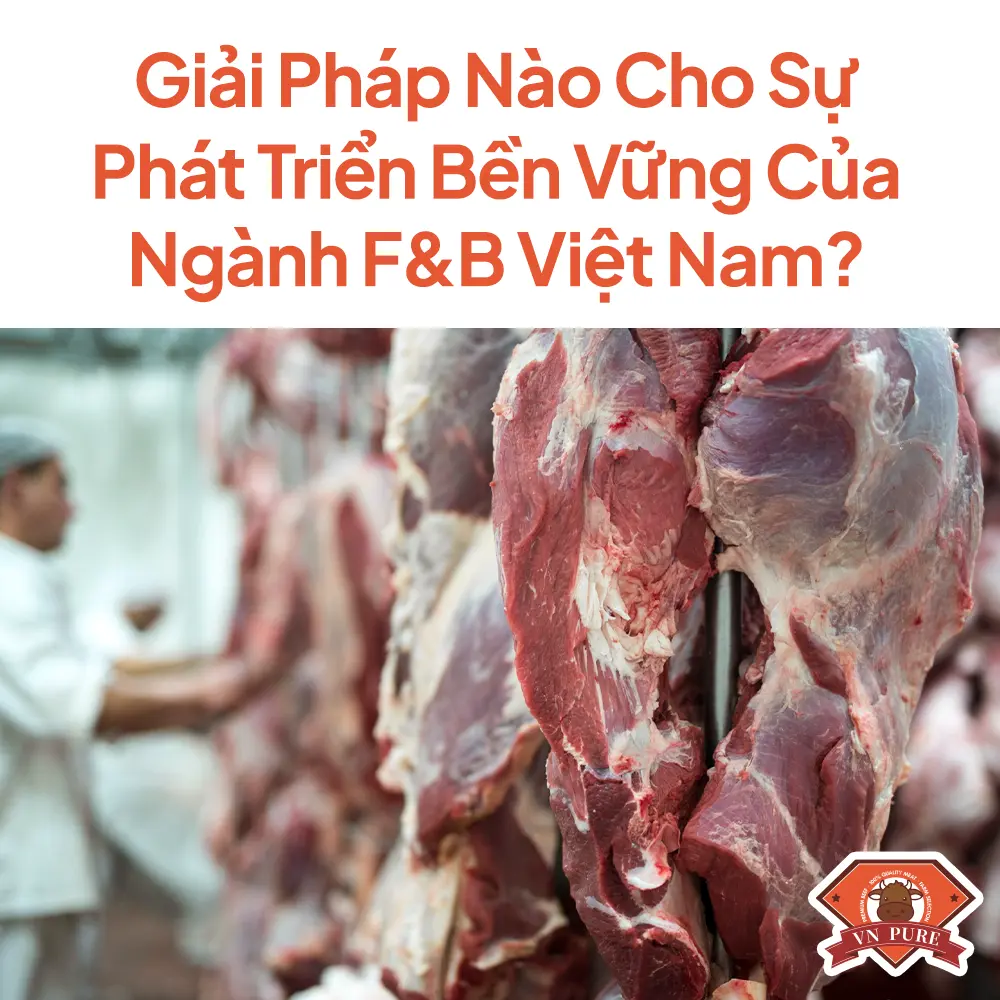
F&B Business Solutions · HORECA 2026
From food cost discipline to supply chain control — the practical moves every HORECA operator in Ho Chi Minh City needs to make right now.
???? Updated: June 5, 2026 ⏱ 9 min read ???? FullyWin VN
????
Over 10 years partnering with restaurants, hotels and HORECA operators across Ho Chi Minh City. Every insight in this article is drawn from real operational data — not textbook theory.
Vietnam's F&B industry is going through its most significant shakeout in a generation. Not because customers have disappeared — Vietnamese people love to eat out and are spending more than ever — but because operating costs are outpacing revenue growth across most restaurant models right now.
The question has shifted. It's no longer "how do I open a restaurant?" It's: "How do I make sure my restaurant is still here — and still profitable — in three years?" This article doesn't deal in theory. These are the solutions that real restaurants, buffet chains and beef hot pot operators in Saigon are applying right now to survive and grow sustainably through 2026.
60%
Of restaurants close within their first 3 years of operation
35%
Maximum ideal food cost for a sustainably profitable HORECA business
3×
How much faster ingredient costs have risen vs. 5 years ago
Ho Chi Minh City alone has over 300,000 registered food and beverage businesses, from street-side stalls to five-star hotel restaurants. Vietnam's F&B market is projected to exceed 1 quadrillion VND by 2027. That sounds like extraordinary opportunity — and it is. But the closure rate is also at a historic high.
The pressure is coming from multiple directions simultaneously: rents are rising, labour costs are climbing, and customers expect higher quality at more competitive prices. Critically, the cost of key ingredients — particularly beef — has become highly volatile, putting beef hot pot, BBQ and steak concepts under serious food cost pressure.
What separates restaurants that survive from those that close has little to do with location or concept. It comes down to one thing: the ability to control operating costs from the ground up.
One of the most common paradoxes in the F&B industry is a restaurant that's full of customers but still losing money. It sounds impossible. It happens constantly. And the causes almost always fall into the same three categories:
Many restaurant owners know their selling price but have no clear picture of the actual cost per dish. When current beef prices spike and the menu isn't adjusted in time, food cost can jump to 45–55% — wiping out profit margins and eating into fixed costs. By the time the owner notices, the damage is already months deep.
Buying beef daily from the wholesale market — different prices every morning, inconsistent quality, no documentation — is the most expensive and highest-risk procurement model a restaurant can run. No contract, no fixed price, no traceability, no leverage.
Electricity, gas, labour, ingredient yield loss during prep — these numbers are rarely tracked with any rigour in most Vietnamese restaurants. A kitchen running without standardized procedures can silently waste 10–15% of monthly revenue without a single person noticing.
???? From operational data across hundreds of HORECA kitchens in Ho Chi Minh City: 80% of restaurant profitability problems can be solved with just three changes — ingredient sourcing, portioning discipline, and menu pricing.
Food cost optimization doesn't begin at the stove. It begins with your supplier. When you're buying the right cut, at the right wholesale price, with consistent quality and reliable delivery scheduling — every downstream step in the kitchen becomes easier to control.
Beef typically accounts for 60–70% of total ingredient cost in hot pot, BBQ and steak concepts. The healthy target for this ingredient group is 28–33%. If you're currently running above 40%, the problem almost certainly lives in your sourcing — not your cooking technique.
Monthly or quarterly beef supply contracts lock in price stability, prioritize your delivery schedule, and give you a solid foundation for menu engineering. This is a non-negotiable step for any restaurant that wants to plan and grow with confidence.
Every beef hot pot set, every steak plate, every BBQ portion needs a fixed gram weight. A 10–20g variance per portion, multiplied across 200 covers per day, is 2–4 kg of beef disappearing daily — potentially over 1 million VND in unnecessary cost every single day.
The question "where do I buy wholesale beef in Ho Chi Minh City?" isn't just a price question — it's a question about the structural integrity of your entire supply chain. A good wholesale beef supplier must deliver three things simultaneously: consistent quality, transparent pricing, and reliable delivery.
Knowing your premium beef cuts and the properties of each section lets you match the right ingredient to the right dish, minimize waste, and build food cost around real numbers:
| Cut | Characteristics | Best for | Notes |
|---|---|---|---|
| Beef brisket (Ba chỉ) | Even fat-to-meat ratio, tender when grilled | BBQ, hot pot rolls | Most popular |
| Beef tenderloin / striploin | Lean, minimal sinew, vibrant red colour | Steak, beef tartare, sauté | Premium |
| Honeycomb shank (Bắp lõi rùa) | Tendon marbled through muscle, sweet and yielding after braising | Pha lau, braises, hot pot | Specialty |
| Beef tendon | Firm, gelatinous after long cooking | Pha lau, pho, braised tendon | Cost-effective |
| Tripe / book tripe | Crisp texture, mild richness | Hot pot, Vietnamese dipping dishes | Distinctly Vietnamese |
A special note on pha lau — Vietnamese braised offal — which is being elevated from street food into upscale restaurant menus across Saigon. The combination of honeycomb shank, tendon and book tripe, slow-braised with lemongrass, spices and coconut water, creates a textural complexity that commands significantly higher menu pricing relative to its ingredient cost. It's one of the highest-margin dishes a HORECA operator can develop.
FullyWin VN supplies the essential proteins for HORECA kitchens — from premium imported cuts to specialist Vietnamese beef:
???????? Australian Import
Consistent fat marbling, ideal for premium BBQ, hot pot and yakiniku concepts. Full import documentation included.
???? Premium Beef Cut
Lean, minimal sinew, vibrant natural colour. The benchmark cut for steak menus, beef tartare and sauté dishes.
???? Pha Lau Specialist
Tendon marbled evenly through the muscle. After long braising: yielding, rich and deeply savoury. Outstanding for pha lau, Vietnamese braises and premium hot pot.
???? VN Pure is a premium domestic Vietnamese beef standard that controls the entire supply chain from farm to delivery. No water injection, no antibiotic residue, full traceability documentation — the benchmark for HORECA operators building a reputation for quality.
Kitchen operating costs typically run 15–25% of revenue, yet very few restaurant operators have clear systems to monitor them. This is the second-largest source of "invisible bleeding" after food cost — and the most fixable.
Beef loses weight during trimming, portioning and cooking. With properly handled chilled beef (bò mát), prep loss should be 8–12%. With frozen beef that's thawed improperly, that number can hit 20–25%. Every percentage point of yield improvement is real cash recovered without changing a single recipe.
Standard Operating Procedures for each dish don't just stabilize quality — they cut new-hire training time dramatically and reduce prep errors. A kitchen with solid SOPs can maintain consistent output even through staff turnover, which in Vietnam's F&B sector is constant.
???? Practical tip: A digital portion scale at every prep station costs a few hundred thousand VND. It eliminates the variability of one cook portioning 200g and another portioning 250g for the same dish — a 25% ingredient variance that compounds invisibly across hundreds of covers per day.
Daily ingredient procurement means high administrative overhead, constant risk of stockouts, and zero negotiating leverage on price. Shifting to a 3-day or weekly ordering cycle typically reduces procurement costs by 8–15% through better wholesale pricing and lower delivery frequency costs.
Menu engineering is the discipline of designing your menu to maximize profitability — not by charging more, but by selling the right dishes at the right price at the right time. It's rarely applied systematically in Vietnamese restaurants, yet it has the most immediate, measurable impact on the bottom line of any of the four solutions in this article.
| Category | Profile | Strategy |
|---|---|---|
| ⭐ Stars | High sales volume + high margin | Protect, feature prominently, never discount |
| ???? Plowhorses | High volume, low margin | Raise price slightly or reduce portion |
| ???? Puzzles | High margin, low order frequency | Reposition in menu, train staff to recommend |
| ???? Dogs | Low volume + low margin | Remove — they consume kitchen time and inventory |
Applied to real HORECA operations: in a fresh beef hot pot restaurant in Saigon, a premium Australian brisket set typically lands in Stars — high order volume, strong margin. Meanwhile, a well-constructed pha lau dish sits in the Puzzle category and can be repositioned into Stars with better menu placement and staff recommendation training — because its food cost (honeycomb shank, tendon, book tripe) is substantially lower than tableside steak cuts, while the dish experience justifies premium pricing.
Vietnam's F&B industry doesn't lack opportunity — but the opportunity belongs to operators who run smart, not just operators who run busy. Sustainable growth doesn't come from a better concept or a prime location. It comes from controlling every cost, every ingredient gram, every kitchen process with intention and discipline.
The four solutions in this article — food cost optimization, strategic beef sourcing, kitchen operating cost control, and menu engineering — aren't aspirational. They are exactly what the restaurants, buffet chains and fresh beef hot pot operators across Saigon are implementing right now to protect margins and build restaurants that last.
The simplest first step you can take today: contact a reliable wholesale beef supplier in Ho Chi Minh City to lock in stable pricing. That single move creates the stable foundation on which every other food cost decision can be built.
FullyWin VN — Premium VN Pure beef wholesale for restaurants, hotels and HORECA operators
Cold-chain delivery · VAT invoicing · Full import documentation · Transparent 2026 pricing
Available 6:00 AM – 6:00 PM daily · Delivery across Ho Chi Minh City · No obligation consultation
What is the current wholesale beef price in Ho Chi Minh City?
Wholesale beef prices in Ho Chi Minh City in 2026 vary by cut and origin: domestic Vietnamese beef runs 150,000–220,000 VND/kg, Australian Angus from 280,000–420,000 VND/kg, and Wagyu from 600,000 VND/kg and above. For the most current HORECA pricing, contact FullyWin VN at 0932.667.467.
What's the ideal food cost percentage for a HORECA restaurant?
The target for a sustainably profitable HORECA operation is 28–35% of revenue. If your food cost exceeds 40%, the root cause is almost always sourcing — not technique. Locking in stable wholesale pricing with a trusted beef supplier is the single most impactful first step.
Which beef cuts work best for Vietnamese braised dishes like pha lau?
Traditional pha lau uses tripe, tendon and shank. For an upgraded version that commands higher menu pricing, VN Pure honeycomb shank (bắp lõi rùa) is exceptional — the marbling of tendon through the muscle becomes incredibly tender and rich after long braising, with a food cost well below premium steakhouse cuts.
What is VN Pure beef and how is it different from commodity market beef?
VN Pure is a premium domestic Vietnamese beef standard that controls the entire supply chain from farm to cold-chain delivery. No antibiotic residue, no water injection, full traceability documentation. It's the quality benchmark for HORECA operators who need consistent, auditable ingredient standards.
How do I start optimizing kitchen operating costs for my restaurant?
Start with three measurable actions: (1) switch from daily spot purchases to weekly or contract-based wholesale ordering; (2) install a portion scale at every prep station; (3) track yield percentage for each protein — properly handled chilled beef should have prep loss of only 8–12%. These three steps alone can recover 10–20% of hidden kitchen waste. Contact 0932.667.467 to discuss supply options.
Vietnam F&B sustainable growth food cost optimization HORECA Ho Chi Minh City beef wholesale HCMC VN Pure beef premium beef cuts pha lau beef cuts current beef price Vietnam restaurant operating cost Saigon beef hot pot